





Refroidissement des centres de données entraîné par la chaleur fatale
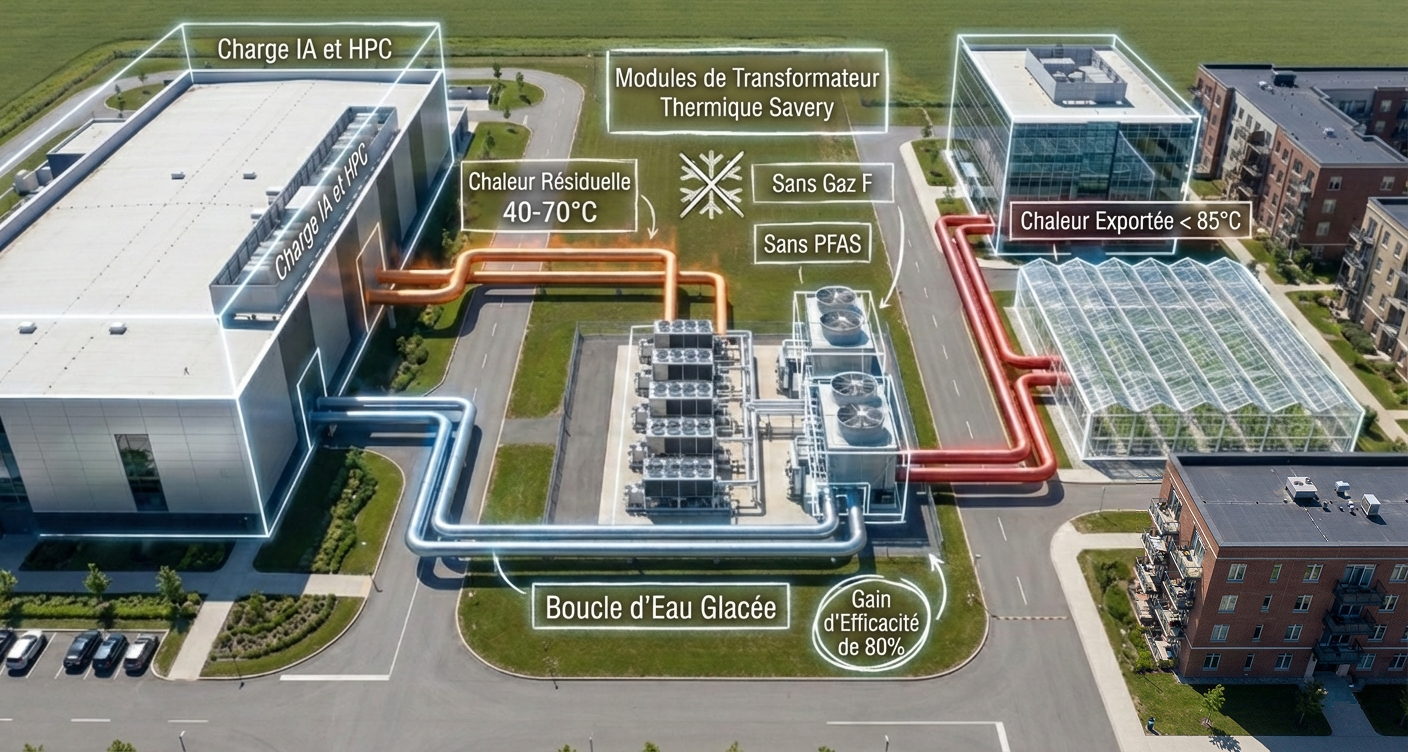
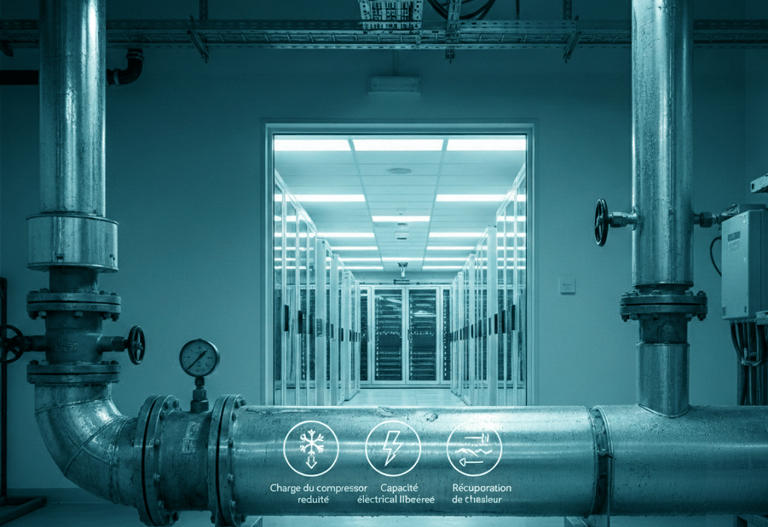
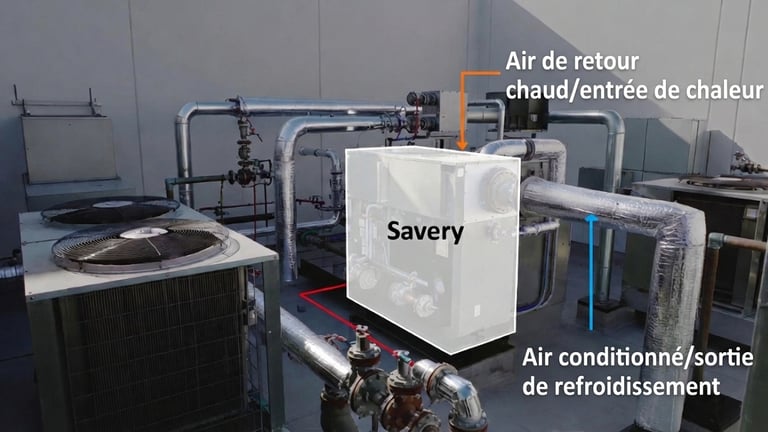
Les modules transformateur thermique de Savery utilisent la chaleur basse température des racks pour entraîner un refroidissement par la chaleur, tout en délivrant une chaleur valorisable pour des usages de réemploi. Résultat : charge compresseur réduite, capacité électrique libérée et meilleure résilience, sans réfrigérants fluorés.
La pression énergétique augmente
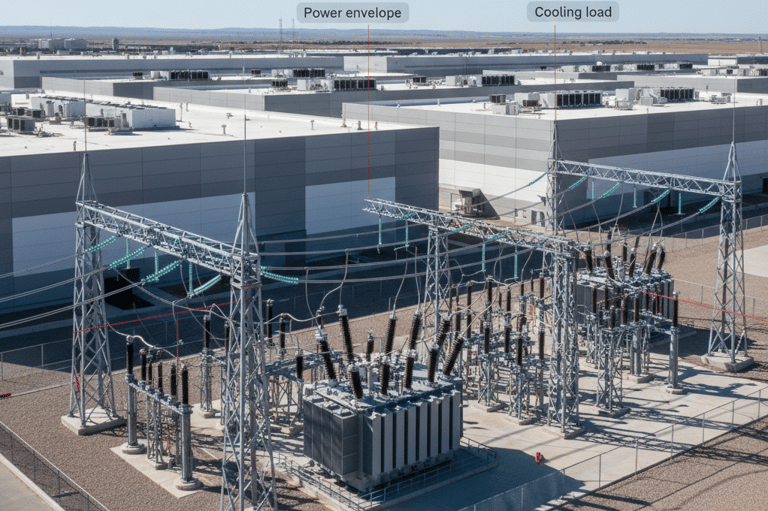
Les centres de données se développent rapidement avec les charges IA, et le refroidissement reste un poste majeur de coûts d’exploitation et de contraintes de puissance électrique. Dans de nombreux sites, il représente une part significative de l’électricité consommée, et le rejet de chaleur ajoute des contraintes en zones urbaines denses.
Points de pression clés :
L’augmentation de densité par rack crée des goulets thermiques
La puissance dédiée au froid entre en concurrence directe avec la puissance IT
La chaleur rejetée est souvent de faible niveau et difficile à réutiliser efficacement
Quelques faits de cadrage
Les centres de données et les réseaux de transmission représentent chacun environ 1–1,5 % de l’électricité mondiale ; la consommation des datacenters en 2022 est estimée à 240–340 TWh (hors minage crypto).
Le refroidissement peut représenter jusqu’à 40 % de la consommation énergétique totale dans certains sites.
La demande augmente avec les charges IA, rendant les stratégies thermiques haute efficacité plus urgentes.
L’énergie du minage crypto est estimée à 110 TWh en 2022.


Enjeux de gestion thermique
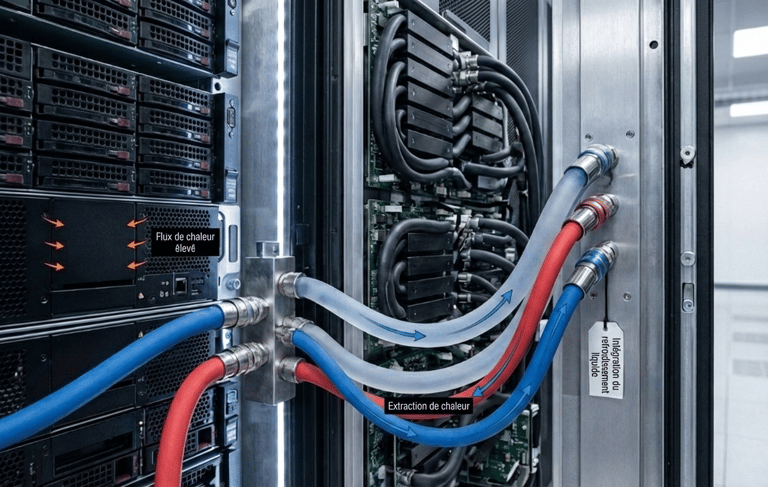
L’IA et le calcul haute performance augmentent la densité thermique et poussent le refroidissement air vers ses limites. Le refroidissement liquide améliore fortement le transfert thermique et permet des puissances rack plus élevées, mais laisse un point clé : la chaleur extraite reste souvent de faible niveau. Sans « upgrade » thermique, elle est difficile à réutiliser.
Ce que cela implique :
Flux thermiques plus élevés par rack
Architectures de refroidissement plus complexes
Écart croissant entre « chaleur extraite » et « chaleur réutilisée »
Valorisation de chaleur encore insuffisante
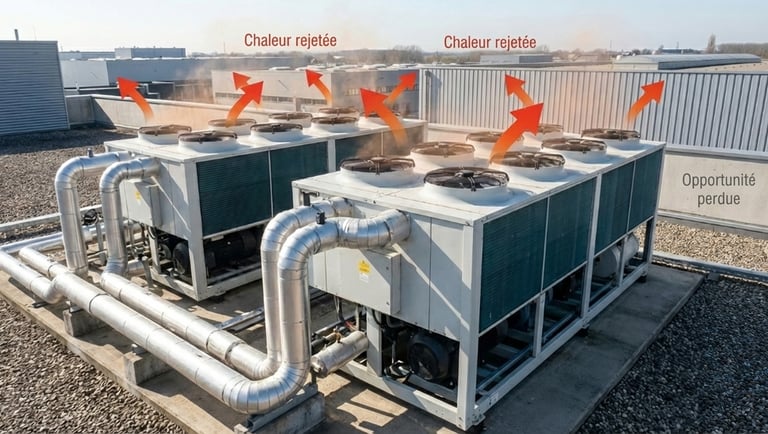
La plupart des systèmes rejettent la chaleur fatale à l’ambiance sans en extraire davantage de valeur. C’est une opportunité manquée : le site produit en continu un flux thermique qui peut devenir du froid utile ou une chaleur valorisable, à condition que la voie de conversion soit efficace et intégrable.
Fiabilité et risques d’indisponibilité
L’instabilité thermique impacte directement la fiabilité. Un refroidissement insuffisant augmente le stress des composants, accélère les défaillances et élève la probabilité d’arrêts non planifiés. La haute disponibilité nécessite un contrôle thermique stable, de la redondance et de la transparence opérationnelle, sans surcoût énergétique excessif.
Solutions Savery
Savery valorise la chaleur basse température en production thermique utile : refroidissement entraîné par la chaleur, plus chaleur valorisable pour le réemploi. Le système est conçu pour des racks denses et des conditions variables, réduisant la dépendance aux compresseurs tout en maintenant un contrôle thermique stable.
Résultats recherchés :
Moins d’électricité de refroidissement et de charge compresseur
Plus de capacité électrique utilisable pour l’IT
Des voies de réemploi de chaleur, plutôt que du rejet